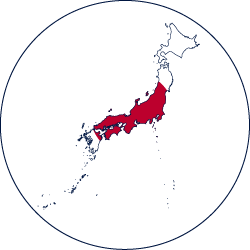
Market Regulation: Supervision is provided by the FSA. Axco’s regulatory tracking focuses on the transition to the Economic Value-based Solvency Ratio (ESR), scheduled for March 31, 2026.
Non-Life Market Trends: Growth is currently led by Cyber and Caregiving insurance; Axco’s data reflects Japan’s demographic shift toward an "ultra-aged" society as a driver for new product innovation.
Distribution Channels: Professionalized agencies remain the dominant channel; however, Axco analysis confirms that "Direct Shop" walk-in consultations are an emerging trend in 2026.
Key Risks & Outlook: Low interest rates impact returns; Axco’s risk assessment notes high exposure to seismic risk and a growing reliance on offshore reinsurance to manage legacy books.
Insurance companies: Axco Navigator details that there are 80 insurance companies are authorised to write business in Japan, of which 39 operate in non-life classes and 41 in life-classes.
Insurance Statistics: Axco reports written premiums in 2024 increased by 4.5% to JPY 9,578,436 Mn with Motor the largest class of business, accounting for 54% of premiums. Insurance penetration stands at 1.51%.
Insurance market reports are produced following a country visit with interviews with professionals working in the sector with systematic updates to information throughout the cycle. Covering market developments, macroeconomic factors and comprehensive details of the regulatory environment including relevant taxation as well as market indicators and company statistics.
Axco’s Japan Non-Life Insurance Market Report (P&C) also comprises a detailed analysis of lines of business and sub-classes such as natural hazards, property, construction and machinery breakdown, motor, workers compensation & employers’ liability and liability.
The Life & Benefits Report for Japan includes detail on social security, healthcare, individual life assurance and pensions information as well as market statistics and life company statistics
Key Benefits
 Insurance Market Reports (Non-Life)
 Insurance Market Reports (Life & Benefits)
 Employee Benefits Reports
 Regulatory Alerts
 Market Profiles
 Insight
 Insight EB
 Compliance Point
 Clinical Trials
| Time-zone Capital city Currency Population Real GDP growth (%) Inflation (%) latest GWP Insurance Penetration (%) |
GMT +9 Tokyo JPY 126.50 mn 0.46% 1.03% 88,720.52 (mn) 1.72 |
Japan was opened to the outside world in 1854 by a US expedition led by Commodore Matthew C Perry, ending 300 years in which foreigners were prevented from landing in Japan. In 1859, non-life insurance was introduced to Japan by a foreign company based in Yokohama; twenty years later, the first domestic insurance company, Tokio Marine, was established. Japan has the third-largest non-life market in the world after the US and China, with a total premium volume of JPY 12.19trn and the third-largest life market.
The non-life market consists of 30 locally incorporated insurers and 15 foreign branches, and around 40 co-operative insurance associations. There are also 101 so-called "small-amount short-term" insurers, a restricted class of insurance carrier. The P&C market is divided roughly 75:25 between conventional insurance companies and co-operative insurance associations, which write mainly household business. Some of the market's huge premium volume - particularly in the co-operative sector - is represented by long-term savings-type policies. Despite Japan's advanced industrial economy and high exposure to earthquakes and typhoons, the property account is massively underinsured.


